Author: Lori Charvat

  • Inclusion

    Inclusion

    The New York Times has always stood for, in my mind, integrity and truth. And, like most organizations they have made mistakes. Great organizations, however, take the opportunity to reflect on their errors and make things right. In this spirit, The Times is making amends for their historical practice of featuring mostly white men in their obituaries, and leaving out some very remarkable women. Even quite well known women – such as poet Sylvia Plath, author Charlotte Bronte, and Bollywood star, Madhubala – failed to be selected for one of the few obituary spots in the newspaper. Digital editor for the Times obituaries desk, Amisha Padnani, is now heading up the Overlooked Project – to resurrect tributes to the lives of important and interesting women. And, thankfully, not just white women, but women of colour.

    One of the exemplary women featured in Overlooked, is Ida B. Wells, who, in spite of living a courageous life, failed to be recognized in the New York Times when she died in 1931. A suffragette, investigative journalist, founder of one of the first newspapers by and for black people, and one of the co-founders of the NAACP, Ida left an indelible mark. Born a slave in the deep south of Mississippi in 1862, she grew up in the chaotic era of Reconstruction. At the age of 16, Ida was left to raise her 6 siblings on her own after her parents died of yellow fever. This was also a period in time that was rife with serial lynchings and torture of blacks in the south. Ida felt a calling to bring these horrible atrocities to light in a newspaper series called Southern Horrors. The irony here is that Ida took great personal risks to memorialize the lives of people who had been lynched, and in the end, her own heroic life had been overlooked.

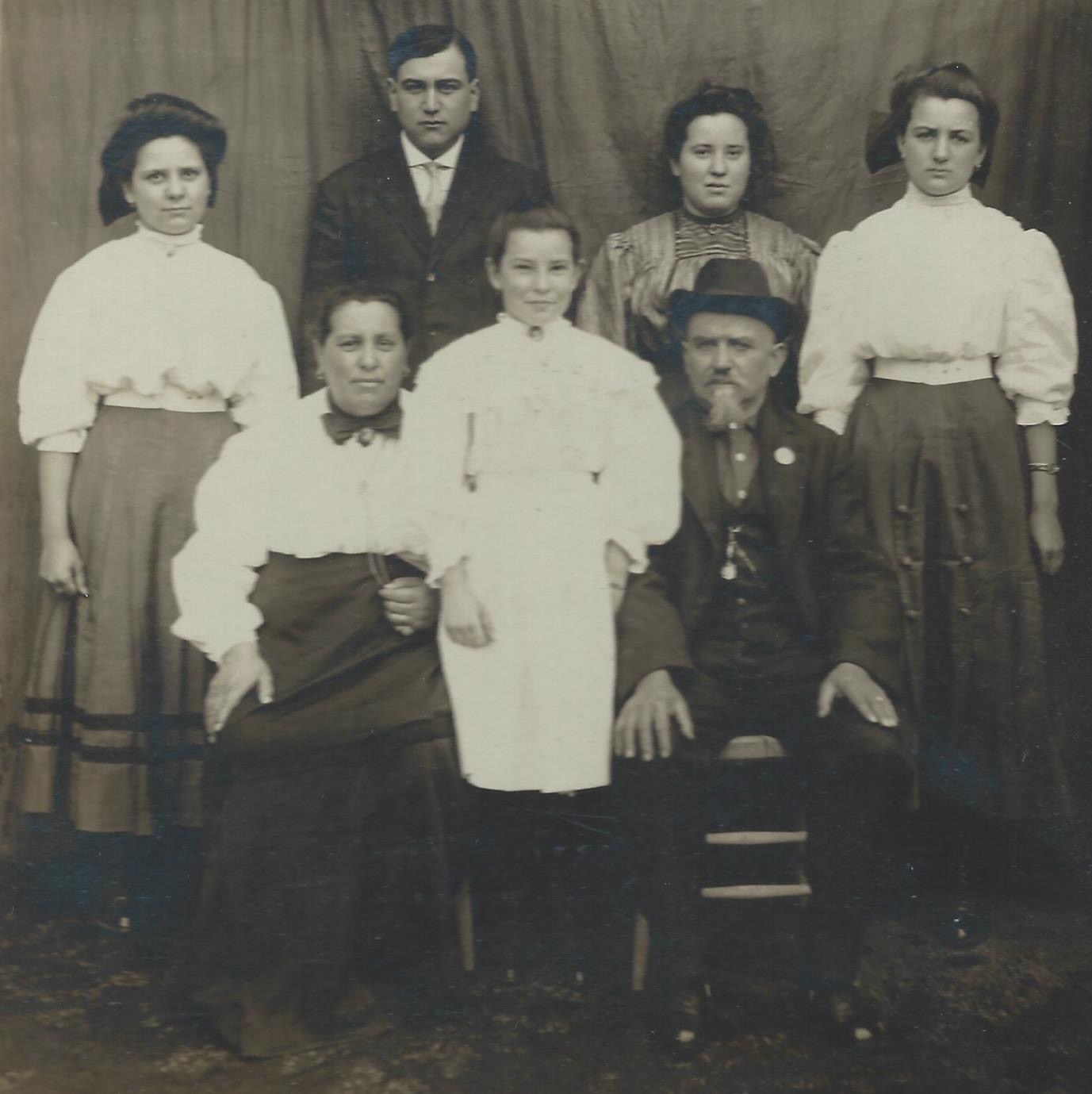
    Recently, my brother was going through some family memorabilia, and he sent me a yellowed newspaper clipping of my grandfather’s obituary. My grandfather was a small-town business owner, who started a wholesale beer and wine business following the end of Prohibition. He was apparently an interesting character, but I never knew him. What was astonishing to me about this obituary is that besides my grandfather, the only people mentioned by name were men. My father, his son, was named. But, my grandfather’s wife, Julia, and his four daughters were merely referred to in the last sentence as Ed’s “widow” and “daughters.” These women, all of them remarkable in their own way, were overlooked too.

    I applaud the New York Times for their efforts to pay tribute to the lives of some amazing women. Their contributions and strength of character are an inspiration. Few of us will ever lead a life so full of courage and grit as Ida B. Wells. Yet, we all have the power to leave a positive impact on the world around us, big or small. I never got to know my grandmother, Julia, because she died when I was quite young. But the stories of my grandmother reflect a life of grace and patience. And love. She raised 5 confident and kind children, and she shared her affection with 12 grandchildren as often as she could. And, she brought people together by being a generous host and an excellent cook. Julia has not been forgotten.

    You can check out the Overlooked Project here https://www.nytimes.com/interactive/2018/obituaries/overlooked.html

    Note: The photo above is of a young Julia, my grandmother, along with her parents, three sisters and a brother.


  • Between Stimulus and Response Lies A Choice

    Between Stimulus and Response Lies A Choice

    I first encountered Viktor Frankl in a high school ethics class, in which his book, Man’s Search for Meaning, was required reading.  In this memoir, published in 1946, Frankl relates his experience and reckoning with life and death in an Auschwitz concentration camp.  From time to time, I pick up my tattered and marked-up copy of Man’s Search for Meaning, and am reminded how lasting Frankl’s insights are for leading a meaningful and considered life. The quote that has been most profound for me of late is this one:

    Between stimulus and response there is a space. In that space is our power to choose our response.   In our response lies our growth and our freedom.

    I have been sharing this quote with several of my coaching clients, as we work through the choices that these leaders face. Every minute of every day, we are faced with choices of how to respond to the stimuli around us. Some of these choices are big, some of them are small.  Do I go to the gym this morning or this afternoon, or skip it all together? Do I respond to this “annoying” email now, later or never? At times, we don’t even get to the point of framing the question and the associated options; we just act.  We respond by habit. Some of these habits serve us well, others perhaps, are a bit of a liability. While the context of Frankl’s writing is about big choices of morality, his ideas have application for the mundane and everything in between.

    My coaching clients often process their workplace conflict issues with me. Conflict can have profound impact on the leader’s confidence, focus, and ability to lead teams.  Our responses in conflict are often of a habitual nature – we respond to situations without taking the time to fully consider our response.  And, sometimes we create a bit of a mess for ourselves when we say or do something that is ill-considered. Or not considered at all.  As Frankl points out, we have the power to choose how to fill that space between stimulus and response.  The trick in creating that space, is to hit the pause button, to allow ourselves the time for consideration. In conflict, time has a way of moving at warp speed, so we have to be on our game to stay out of the mess. You know the scenario: Someone says something or makes a gesture, and we are triggered into action (fight, perhaps) or inaction (flight or freeze). And, before that action, we do a quick run-through of a story in our head about the “other” person’s motivations or their character. We judge them and perhaps ourselves. The story we have concocted unleashes an array of emotions in us (fear, anger, anxiety), and BAM, before we know it, out pops the response. If only we had hit pause. We may still have chosen to act in the way that habit led us to act.  But, perhaps not.  The learning, or the growth, comes through the process of considering our story-making, our emotions and our actions. And, when we are able to create the space for considered response, we grant ourselves the freedom to be the person that we want to be – in that moment and beyond.


  • Get In or Get Out

    Get In or Get Out

    I work with leaders and teams to help them get clear on where they are going, and strategize on how best to get there. Often I get called in to assist when a team has derailed, and the pain of floundering or conflict has gotten too much to bear. Recently I was working with a team that was feeling an acute sense of pain: lots of turnover, too much work, inexperienced leaders, lack of clear direction, and lots and lots of blaming and shaming. Yikes. And, this is not all that uncommon in my experience.

    Assessing the source of discontent and dysfunction is always the first step. I look at the layers of the system – the individuals, the leadership, the team interplay, the organizational rules and processes. I get a read on the culture or “how things are done around here.” I name what is in the way of moving towards better – better relationships, better communication, and ultimately, better results.

    But, naming the challenges is the easy part. Doing the work of change and moving forward is the hard stuff. This is where the people within the organization have to roll up their sleeves and get real. I, as the consultant, will impart my good advice on how to move forward, but whether anything gets done, and in a lasting, sustainable way, is up to the people inside. This requires ownership of the problems and the solutions from bottom to top, plus accountability by all to do their part. This means that all the blaming on “them” has to cease, and the narrative of “us” put in its place. This means no more whining, unless the whining is followed with reasonable solutions and ownership of action.

    Moving forward through change and conflict requires systemic and individual efforts that are pointed in the same direction and aligned. From the system perspective, organizations must have structures, policies and leadership in place that reflect the values and vision towards what really matters.

    At the individual level, I say: Get in or get out. Employees and leaders are free agents. Although, there are situations where employment options are limited. Staying stuck in a workplace that feels toxic, where individuals lack a sense of agency or hope for change, can lead to diminished personal health. If you are not happy with your organization and you are not able or willing to make the changes you can make, then get out. Or, get in. Get in the game. Consider what changes you can make and are willing to make towards a better team and organization. Whatever your choice, just own it, and move forward.

    Accountability for a better workplace comes from the top, the bottom, the middle and the sides.

  • Do the Right Thing

    Do the Right Thing

    If you are like me, you have this annoying voice in your head that barks at you, commanding that you should do this or not do that – if you are to be worthy, loveable, a winner rather than a loser. Meet my gremlin, the voice in my head: Sister Agatha. She means well, but is judging, sanctimonious, and very bossy. Persistent, like a dog with a bone, and crafty with the lever of shame. Sister Agatha lobbies me to do things that I don’t really want to do, and to do things that aren’t always good for me.

    And so, I invite you to mix things up a bit, and embark on a day, perhaps a week, of no “shoulds.” Just see what you can learn from adjusting the lens on your choice-making process.

    To make this work, you must be very deliberate in interrupting the voice of your gremlin  to make space for your own considered actions. My tactic for interrupting Sister Agatha is to insert a pause – long enough to consider what was really best for me. Sometimes this is a long pause. Take the time you need to stop the reflex of  “yes” to a request, when saying “no” might be the better response for you. You might need to stop long enough to ask: what do I really want to do in this situation? If this is not clear,  probe further and ask: what action best serves my goals (for today, in the bigger picture)? And then the clincher, ask: If I do this, what am I not going to do?

    When I practiced this exercise recently, I was reminded of a few things. First of all, making a considered choice feels really good.  It is self-care.  Some of my choices were met with disappointment from others. And, that is okay.  The world continued to spin and I was not I deemed an unworthy colleague, a partner, or a friend by saying “no.” Secondly, I noticed that a lot of my deliberations of choice were about allocating my time, that most precious of commodities. Try as I might, I simply cannot expand the pie of time. Thirdly, I learned that once I was able to set aside the disappointment of others or the guilt of not doing X, I had a heck of a lot more fun and flow in what I was choosing to do, because I was doing what mattered most to me. Finally, I learned that sometimes Sister Agatha was right. At times, there are things we have to do that are the right thing to do – all things considered.